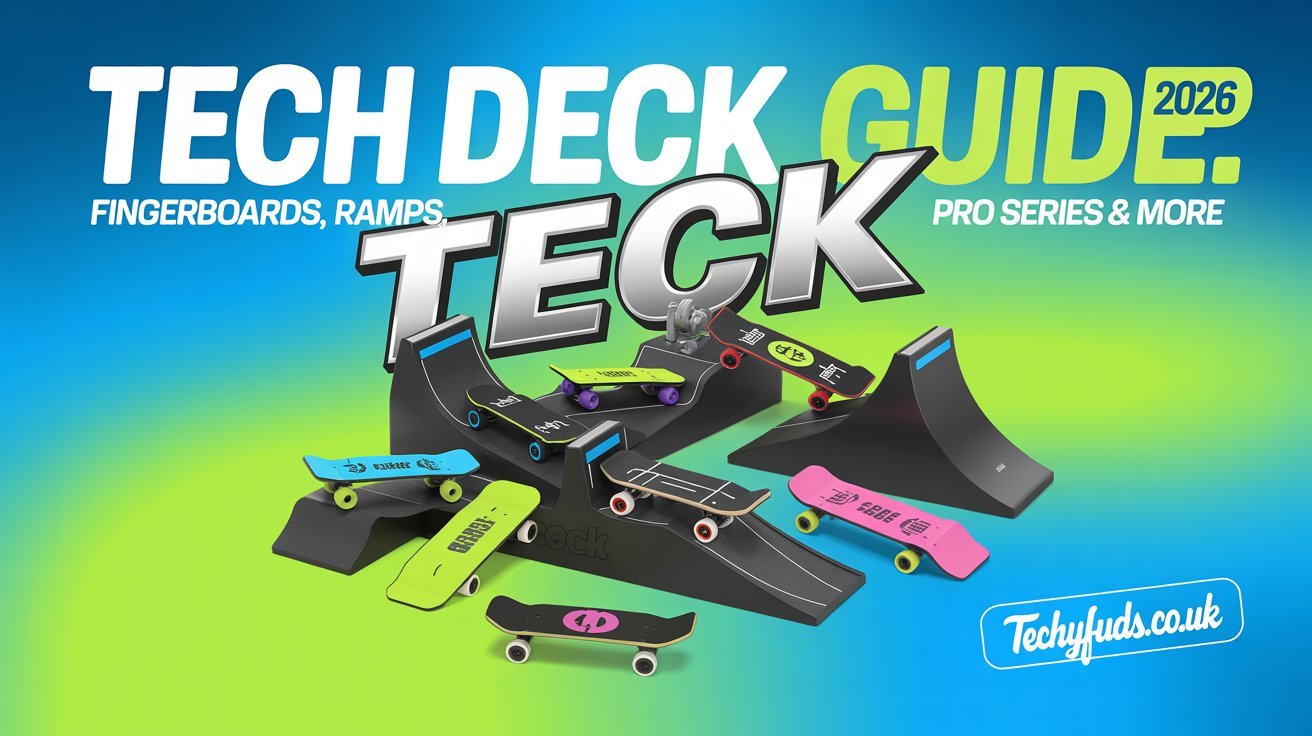
Welcome to the exciting world of miniature action sports! If you have ever wanted to shred like a pro without leaving your desk, you are in the right place. Tech Deck has been the king of the fingerboarding world for decades, and in 2026, it is bigger and better than ever. Whether you are a curious beginner or a seasoned pro looking for the next challenge, this guide will walk you through everything you need to know about these tiny but mighty boards.
From the classic tech deck skateboards we all grew up with to the high-end tech deck pro series, there is a whole universe to discover. It is not just about toys anymore; it is about skill, precision, and building your own mini empire. We will dive into the history, the gear, and the coolest tricks that will make your friends’ jaws drop. Grab your favorite board, and let’s get rolling into the details of the fingerboarding subculture!
What Exactly is a Tech Deck Fingerboard?
A tech deck fingerboard is a tiny, 96mm replica of a real skateboard. It is designed to look, feel, and act just like the boards the pros use on the streets. These little wonders come with real grip tape, metal trucks, and authentic graphics from famous skate brands like Blind, Elements, and Santa Cruz. When you hold one, you aren’t just holding a toy; you are holding a piece of skate history that fits right in your pocket.
Using a tech deck is all about using your fingers—usually the index and middle fingers—to mimic the movements of a skater’s legs. You can jump, flip, and grind on almost any surface. In 2026, the technology has improved so much that these boards feel smoother than ever before. People of all ages use them to relax at work, practice coordination, or even compete in global fingerboarding tournaments that draw thousands of viewers online.
The Evolution of Tech Deck Skateboards
The story of tech deck skateboards started in the late 1990s when a young skater named Steven Asher couldn’t skate outside due to the rain. He made a tiny board out of wood and paper, and his dad, who worked in the toy industry, saw the potential. Fast forward to today, and these boards have moved from simple plastic novelties to high-performance tools. The graphics are no longer just stickers; they are high-resolution prints that stay on even after heavy use.
Collectors today hunt for “vintage” boards from the early 2000s, but the modern tech deck lineup is where the real fun is. You can find boards with different widths, concave shapes, and even varying wheel hardness. This variety allows every “rider” to find a board that matches their personal style. It’s amazing how a simple idea born on a rainy day turned into a global phenomenon that keeps the spirit of skateboarding alive indoors.
Exploring the Tech Deck Pro Series
For those who want to take their hobby to a professional level, the tech deck pro series is the gold standard. While a standard board is great for starting out, the tech deck pro line features premium materials like real 5-ply maple wood. This gives the board much more “pop,” which is the snap you feel when you push down on the tail to jump. These boards are designed for serious enthusiasts who want the most realistic experience possible.
The tech deck pro series also includes upgraded parts like urethane wheels with actual ball bearings. This means the wheels spin longer and roll much smoother on various surfaces. The trucks are also more adjustable, allowing you to tighten or loosen them for better turning. If you find yourself spending hours perfecting a single trick, investing in a tech deck pro setup will feel like going from a bicycle to a high-speed motorcycle. It changes the game entirely
Building Your Own Tech Deck Skatepark
No skater is complete without a place to ride, and that is where the tech deck skatepark comes in. These modular sets allow you to build the park of your dreams right on your dining table. You can connect different pieces to create a massive flow of obstacles. In 2026, the X-Connect system is the most popular way to build, allowing you to snap together stairs, banks, and quarters in seconds.
A well-designed tech deck skatepark should have a mix of street obstacles and transition pieces. Street obstacles include things like handrails and hubba ledges, while transition pieces are things like bowls and half-pipes. The beauty of these sets is that they are totally customizable. If you get bored of one layout, you can just pull it apart and build something completely new. It’s like Lego for skaters, providing endless hours of creative “shredding” opportunities.
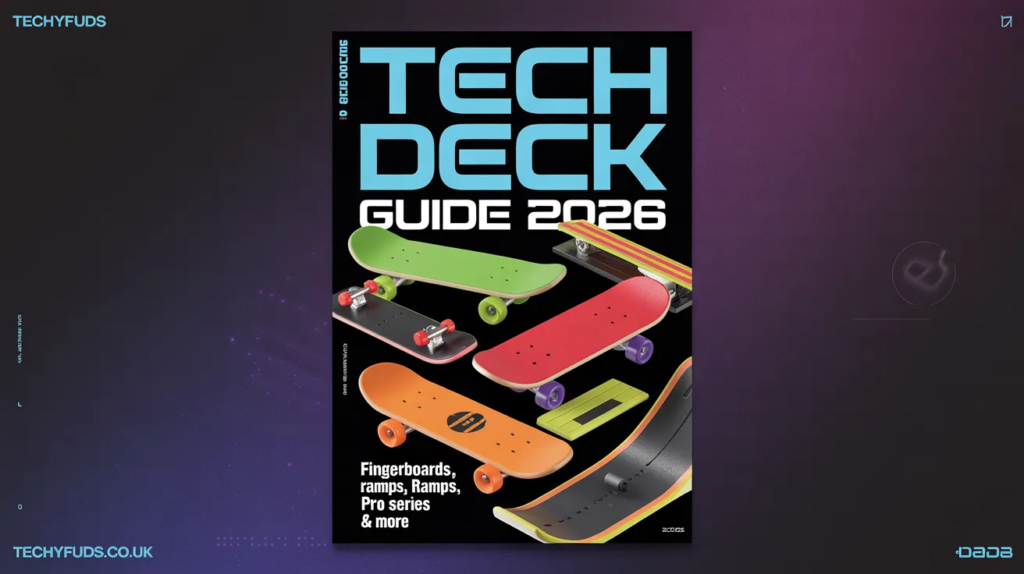
Mastering Cool Tech Deck Ramps
If you aren’t ready for a full park, starting with a few tech deck ramps is a smart move. Ramps like the “Big Vert Wall” or the “Flip N’ Grind” give you a specific place to practice your vertical or technical skills. These ramps are built to scale, so the angles are perfect for landing those difficult flips. Many of these tech deck ramps also come with exclusive boards that you can’t get anywhere else, making them a great value for collectors.
Using tech deck ramps helps you learn how to manage your speed and “drop-in” correctly. When you use a ramp, you have to learn how to keep your fingers glued to the board as you go upside down or sideways. It’s a great way to build muscle memory. Plus, having a few sturdy ramps around makes your desk look like a miniature pro training ground. Whether it’s a simple kicker or a complex pyramid, every ramp adds a new layer of fun to your session.
Essential Tech Deck Tricks for Beginners
Learning tech deck tricks is the core of the hobby. The first trick everyone should learn is the Ollie. This is where you pop the tail down and slide your front finger forward to level the board in the air. Once you master the Ollie, the world of tech deck tricks opens up. You can move on to Kickflips, where the board spins, or Shove-its, where the board rotates horizontally under your fingers.
Don’t get frustrated if you can’t land a trick right away! It takes time to get the “flick” just right. Many pros suggest practicing on your leg first because the soft surface makes it easier to feel the board’s movement. As you get better, you can start combining moves into “lines.” For example, you could Ollie onto a rail, do a 50-50 grind, and then Kickflip off. The possibilities are only limited by your imagination and finger dexterity!
Meeting the Tech Deck Dudes
A fun part of the brand’s history is the tech deck dudes. These were small, collectible characters with “attitude” that came with their own boards. Each character had a unique personality and look, often with spiky hair and baggy clothes that fit the early 2000s skate vibe. While they are more of a nostalgic collectible today, tech deck dudes played a huge role in making the brand popular with kids who loved both toys and skating.
Even though the focus has shifted more toward realistic fingerboarding, many fans still hunt for rare tech deck dudes on auction sites. They represent a fun, wacky side of the culture where the goal was just to have a blast. Some of the rare “Dudes” can sell for a decent amount of money today! They remind us that at the end of the day, fingerboarding is about having fun and expressing your personality through your gear and your style.
Taking a Ride on Tech Deck BMX
Did you know it’s not just about skateboards? The tech deck bmx line brings the world of freestyle bike riding to your fingertips. These miniature bikes are incredibly detailed, featuring working metal frames, rubber tires, and even flickable handlebars for tailwhips. Just like the boards, tech deck bmx bikes allow you to perform realistic stunts like 360-degree spins, barspins, and backflips using your hands.
The tech deck bmx experience is a bit different because you use your thumb and index finger to grip the frame and handlebars. It requires a different kind of coordination than the skateboards, which makes it a refreshing change of pace. Many of the tech deck skatepark sets are actually compatible with the bikes too! This means you can use the same ramps for both your boards and your bikes, creating a true multi-sport miniature world.
Understanding the Fingerboarding Community
The tech deck fingerboard community is one of the most supportive groups on the internet. In 2026, social media is flooded with “finger-vlogs” where people show off their custom setups and latest clips. Being part of this community means sharing tips, trading boards, and even participating in “Game of S.K.A.T.E” matches via video calls. It’s a global hobby that connects people from all walks of life.
Even big-name pro skaters like Tony Hawk and Nyjah Huston are fans of the tech deck world. They often have their own signature boards in the lineup. This connection to the real world of professional skating gives the hobby a lot of credibility. Whether you are posting your first Ollie on TikTok or competing in a local “meet-up,” you are part of a thriving culture that celebrates creativity and the DIY spirit of action sports.
Why Every Desk Needs a Tech Deck
In a world where we spend so much time on screens, having a tech deck on your desk is a great way to take a “tactile break.” It’s a fidget toy with a high skill ceiling. Instead of just spinning something, you are actually learning a skill. Many people find that doing a few tech deck tricks between tasks helps them refocus and reduces stress. It is a productive way to keep your hands busy while your brain processes information.
Plus, a tech deck is a great conversation starter. When someone sees a miniature tech deck skateboard on your desk, they almost always want to try it out. It brings a bit of playfulness to any environment. From classrooms to high-powered boardrooms, these tiny boards have found a home everywhere. They remind us to stay young at heart and that you are never too old to learn a new trick—even if that trick is only three inches long
Conclusion
The world of tech deck is more than just a hobby; it is a way to bring the thrill of action sports into your everyday life. Whether you are collecting tech deck dudes for nostalgia or mastering the tech deck pro series for competition, there is no wrong way to play. The most important thing is to have fun, be creative, and keep practicing those flips!
Are you ready to build your first tech deck skatepark or land your first kickflip? The community is waiting for you. Grab a board, find a flat surface, and see where your fingers can take you. The journey from a beginner to a pro is a blast, and every “stomp” of a trick feels like a huge victory. Happy shredding!
FAQs
1. What is the difference between a Tech Deck and a pro fingerboard?
A standard tech deck is usually made of plastic and is very affordable. A tech deck pro series board is made of wood, has wheels with bearings, and uses foam grip tape for better control.
2. Can I use Tech Deck BMX bikes on the skatepark sets?
Yes! Most tech deck skatepark sets are designed to be used with both fingerboards and the tech deck bmx bikes. The ramps and rails work great for both.
3. Are Tech Decks good for kids?
Absolutely! They are recommended for ages 6 and up. They help with fine motor skills and hand-eye coordination. Just be careful with small parts around very young children.
4. How do I make my Tech Deck wheels spin better?
If you have a standard board, you can try cleaning the axles. However, for the best spin, the tech deck pro wheels with actual bearings are the way to go.
5. Where can I learn new tech deck tricks?
The best places are YouTube and TikTok! There are thousands of tutorials for everything from basic Ollies to advanced 360-flips. Practice and patience are key!
6. Why is it called a fingerboard?
It is called a fingerboard because you “ride” the miniature skateboard using your fingers instead of your feet. It’s all about scaling down the experience of skating.
Leave a Reply