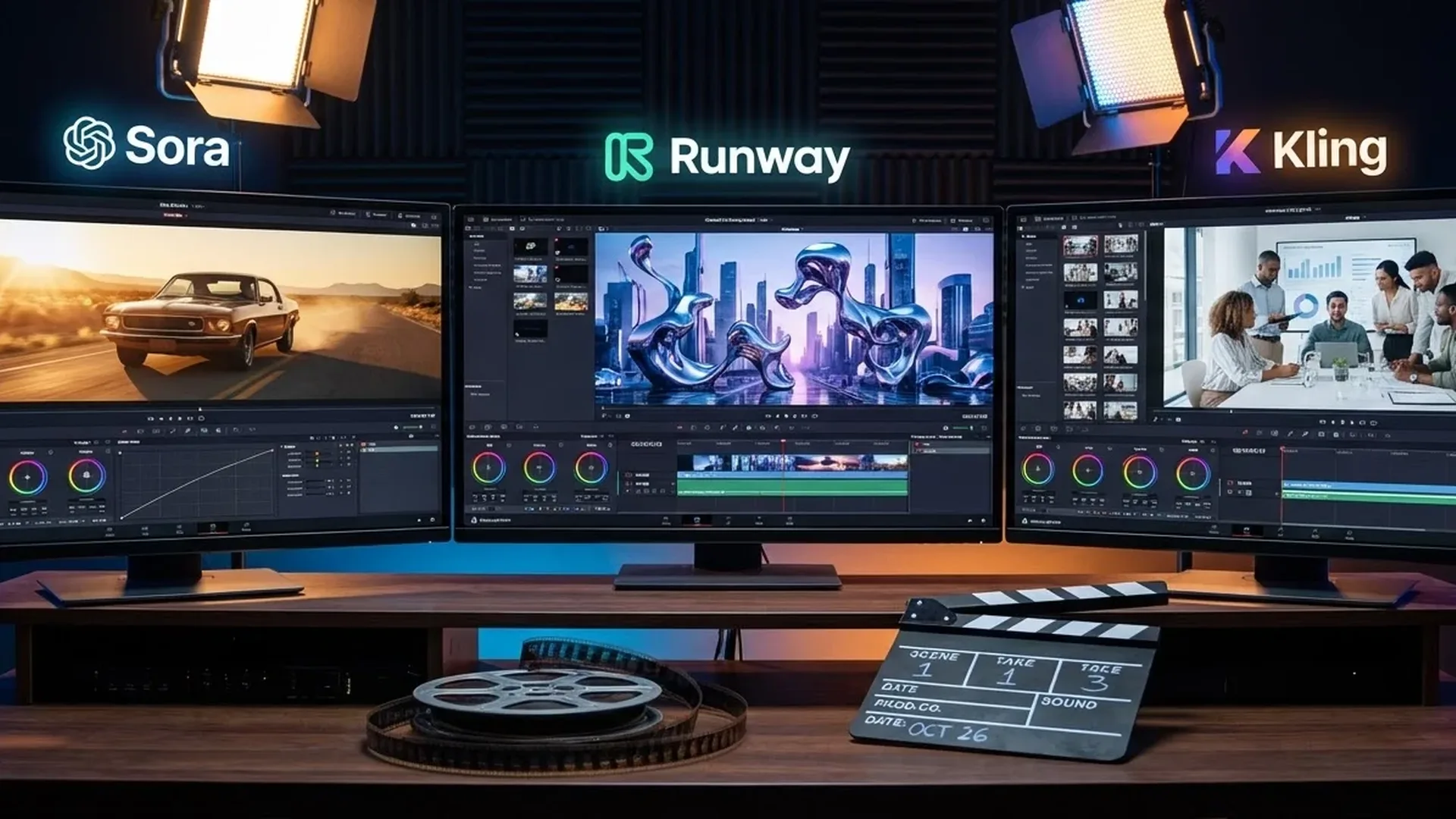
Artificial intelligence has already transformed many parts of digital content creation, but video production is experiencing one of the biggest shifts. For years, creating high quality videos required cameras, editing software, and a significant amount of time spent on post production. Today, AI video models are beginning to automate many of these tasks. One of the most talked about developments in this space is Sora 2, which represents a new generation of AI video technology capable of generating complex scenes directly from prompts.
In 2026, creators are increasingly looking for tools that can help them produce content faster while maintaining professional quality. The demand for video content continues to grow across platforms like YouTube, TikTok, and Instagram. As competition increases, creators need tools that allow them to move quickly from idea to finished video without spending hours editing footage or assembling visuals.
Sora 2 represents a major step toward that future. Instead of treating video editing as a technical process, AI systems are beginning to act more like creative partners that can interpret ideas and turn them into visual stories. This shift is changing how creators think about video production, opening the door to faster workflows and new creative possibilities.
This article explores how Sora 2 is shaping the future of AI video creation in 2026 and what it means for creators who want to produce content more efficiently.
What makes Sora 2 different from earlier AI video tools?
Sora 2 stands out because it focuses on generating coherent video scenes directly from prompts rather than simply editing existing footage. Earlier AI video tools often required creators to upload clips or manually assemble visuals. Sora 2 takes a different approach by generating entire video sequences from descriptions.
This capability allows creators to move directly from an idea to a visual output. Instead of searching for footage or creating animations manually, the AI interprets prompts and produces scenes that match the narrative described by the user. This makes it possible to create cinematic visuals, dynamic environments, and storytelling sequences without a traditional production setup.
Another key difference is the level of realism and scene consistency that newer AI video models can achieve. Earlier systems often struggled with motion continuity or visual coherence. Sora 2 improves on this by generating more consistent environments and characters across frames.
For creators, this means that AI video tools are no longer limited to experimental clips. They are beginning to function as full creative systems capable of producing complete video sequences.
How does Sora 2 simplify the video creation process?
Modern creators often face a complicated production workflow that includes scripting, storyboarding, visual creation, voice recording, and editing. Sora 2 changes this process by allowing AI to handle several of these steps simultaneously.
Platforms that integrate Sora 2 alongside invideo demonstrate how this approach can work in practice. Instead of producing short clips with strict generation limits, creators can use AI to generate complete videos that include scripts, scenes, visuals, and editing in one streamlined workflow. This approach effectively turns AI into a production assistant capable of handling many parts of the creative process.
For creators who want a faster way to produce content, this type of system functions almost like an AI powered production house. The AI can help generate ideas, structure scenes, and build videos without requiring users to manually assemble every element.
Creators who produce content on the go can also rely on tools such as a video creator app to generate and edit videos directly from their devices. This flexibility allows creators to capture ideas quickly and turn them into finished content without needing a full desktop editing setup.
By combining prompt based generation with automated editing workflows, Sora 2 helps simplify video production while keeping the creative process accessible to both beginners and experienced creators.
Why are creators adopting AI video models faster in 2026?
The rapid adoption of AI video tools is largely driven by the growing demand for video content across the internet. Platforms prioritize video because it drives engagement, watch time, and user interaction. As a result, creators are under constant pressure to publish content consistently.
Traditional video production can slow down this process. Writing scripts, recording voiceovers, editing footage, and designing visuals often require hours of work. AI video models like Sora 2 address this challenge by automating many of these tasks.
Creators can now experiment with multiple video ideas quickly without committing large amounts of time to each concept. Instead of producing one video after days of editing, AI tools allow creators to generate several variations in a much shorter timeframe.
This speed makes it easier to test different formats, explore new storytelling styles, and respond to audience feedback quickly. As competition grows across content platforms, this ability to produce content faster becomes a significant advantage.
How is Sora 2 changing storytelling in video content?
Storytelling is one of the most important aspects of video content. Whether a creator is producing tutorials, entertainment videos, or marketing content, the ability to communicate ideas visually plays a major role in audience engagement.
Sora 2 introduces new possibilities for storytelling by allowing creators to generate scenes that match complex prompts. Instead of relying only on available footage, creators can describe specific environments, actions, and visual moods.
For example, a creator might describe a futuristic city, a dramatic cinematic sequence, or an educational visual demonstration. The AI can then generate scenes that bring those ideas to life.
This opens the door to more imaginative storytelling because creators are no longer limited by the footage they can record or purchase. AI generated visuals allow creators to experiment with new styles and creative directions without large production budgets.
As AI video technology continues to evolve, storytelling is likely to become more accessible and more visually dynamic.
How can creators integrate Sora 2 into their workflow?
For creators interested in using Sora 2, the key is understanding how it fits within the broader content creation workflow. AI video models are most effective when used as part of a larger creative system rather than as isolated tools.
Creators can begin by using AI to generate ideas and visual concepts. Once the structure of a video is established, AI tools can help produce scenes, narration, and transitions automatically.
This approach allows creators to maintain creative control while still benefiting from automation. Instead of replacing the creator, the AI acts as a collaborative assistant that handles repetitive tasks and technical production work.
Over time, creators may build workflows that combine prompt based video generation, automated editing, and AI assisted storytelling. This combination makes it possible to produce high quality videos more efficiently while still preserving creative intent.
What does the future of AI video creation look like?
The development of Sora 2 represents a broader trend toward more autonomous AI creative systems. Instead of focusing on single tasks like editing or animation, future AI platforms are likely to combine multiple capabilities into integrated production environments.
These systems will be able to interpret prompts, generate visuals, structure narratives, and edit videos automatically. For creators, this means the production process will continue to become faster and more flexible.
Another important development is accessibility. As AI video tools improve, more people will be able to create professional quality videos without needing specialized equipment or technical training.
This shift could expand the creator economy by allowing individuals, small businesses, and educators to produce content at a much larger scale. The barriers that once limited video production are gradually disappearing.
In the coming years, AI video creation will likely evolve into a collaborative process where creators guide the vision while AI handles much of the technical execution.
Conclusion
Sora 2 represents an important step forward in the evolution of AI video technology. By enabling creators to generate video scenes directly from prompts, it simplifies many of the complex steps traditionally involved in video production.
For creators in 2026, the ability to move quickly from idea to finished video is becoming increasingly important. AI video models make this possible by automating scripting, scene creation, and editing tasks that once required extensive manual work.
At the same time, the role of the creator remains central. AI tools do not replace creativity. Instead, they provide new ways to bring ideas to life and experiment with storytelling.
Leave a Reply